Keep your family safe on the road with these 3 simple rules
Are you nervous about your teen getting a drivers license? Do you worry about passing down unsafe driving habits to your kids? Don’t wait until there’s a close call, a ticket, or worse – a crash – to talk about traffic safety with your loved ones.
Family Rules are an easy way to prioritize safety and build safe habits with your loved ones.
Our driving behaviors are shaped by our families and habits we observed as children. When we agree to a set of rules as a unit, we help keep each other safe.
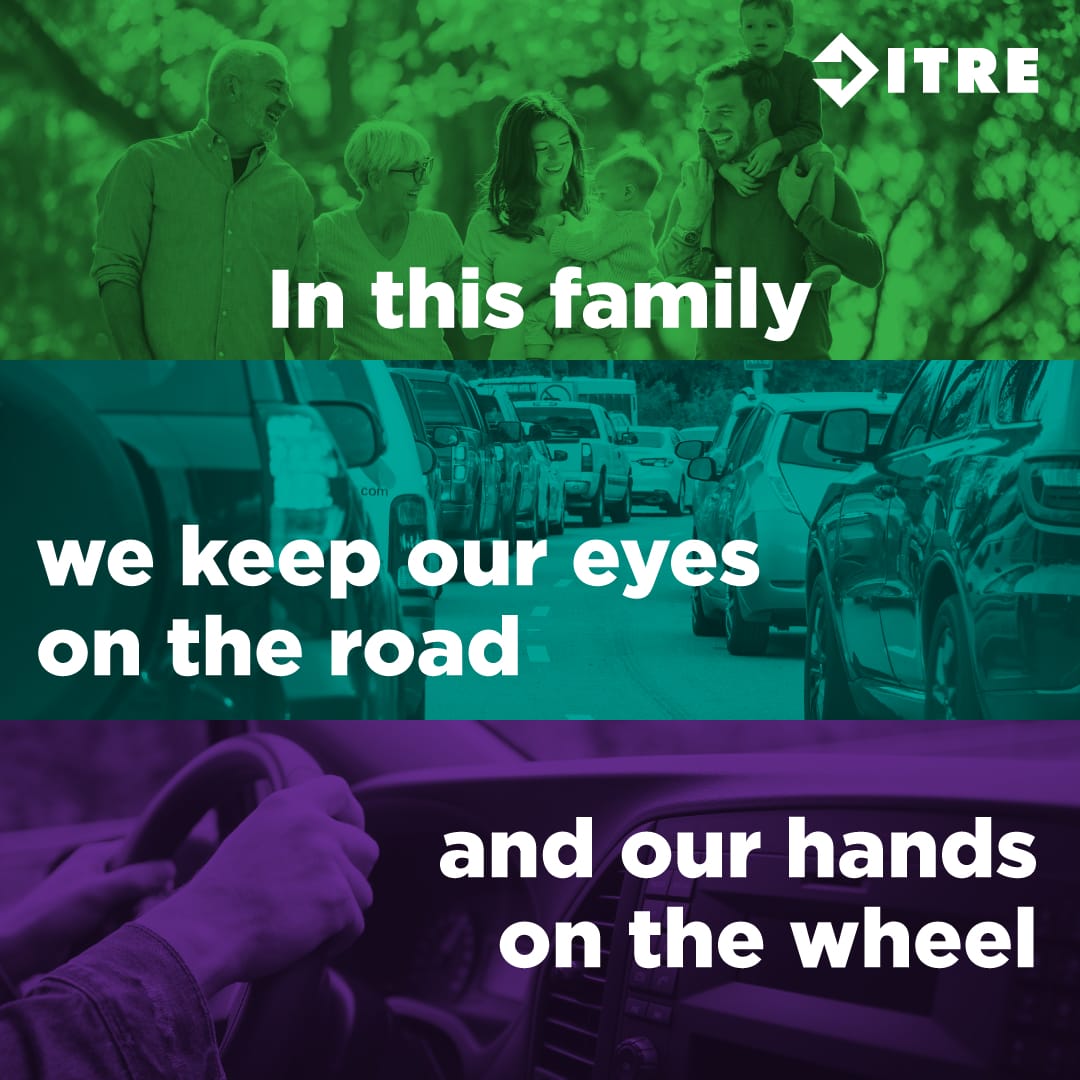
Rule 1: Eyes on the Road, Hands on the Wheel
Do you want your teen driving distracted? Of course not! The best way to keep the phone out of their hands is to commit as a family to keep eyes on the road and hands on the wheel.
Help each other stay accountable by refraining from texting or calling while someone is driving. Explain your reasoning out loud to smaller children (for example, “I can hear Grandma calling but I’ll call her back once we’re stopped”) and most importantly, stick to it. We can’t expect our kids to avoid distracted driving if we do it.
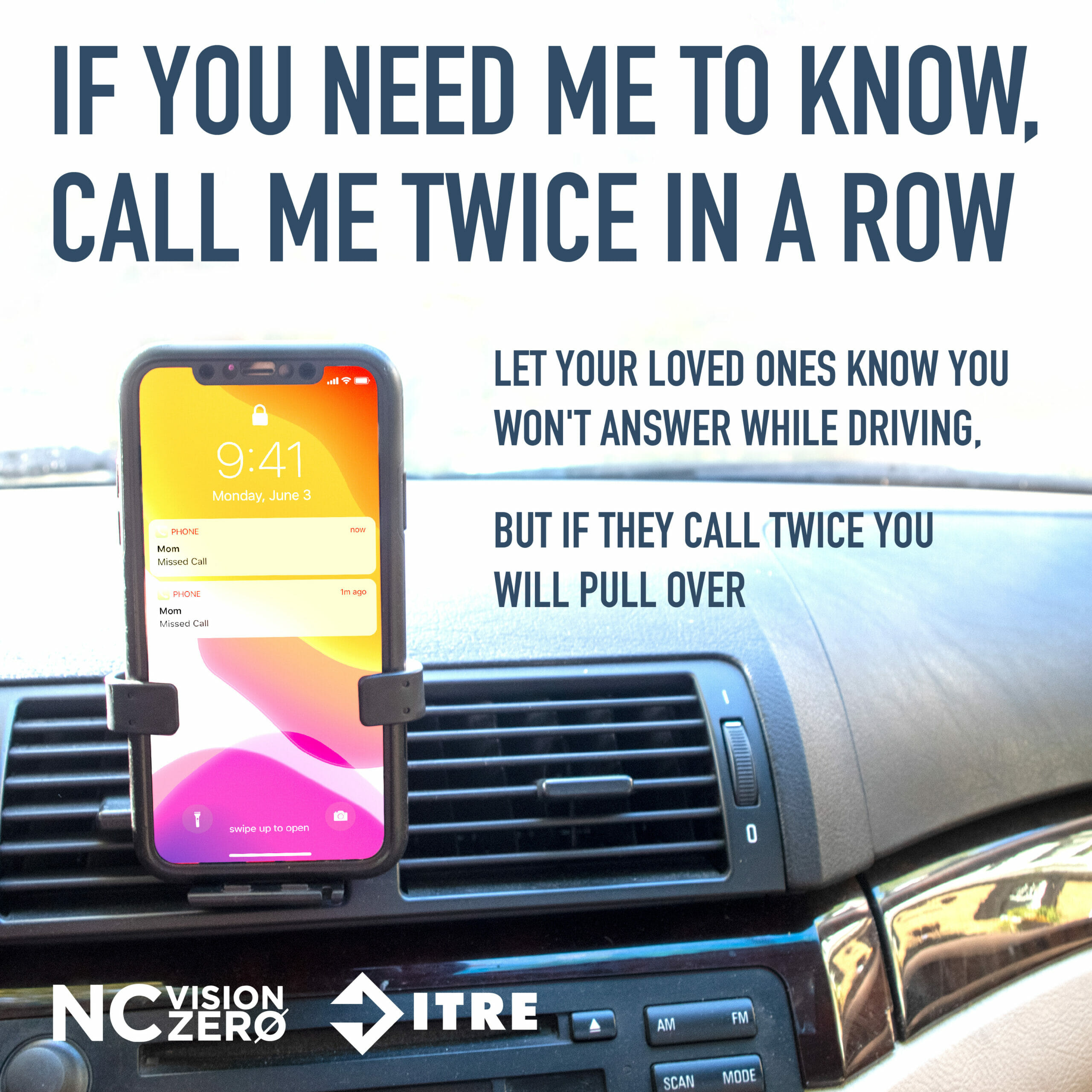
Make a plan for emergencies so no one feels worried about missing something while driving.
“If there is an emergency while I know he’s driving, I’ll call twice in a row to alert him. He’ll pull over somewhere safe and call me back.”
Use technology to help you stay focused.
“We use Android Auto so I can use voice commands to change music or look up directions.”
“I set up my phone to automatically go into Driving Mode, silencing texts or calls, whenever it connects to my car’s Bluetooth.”
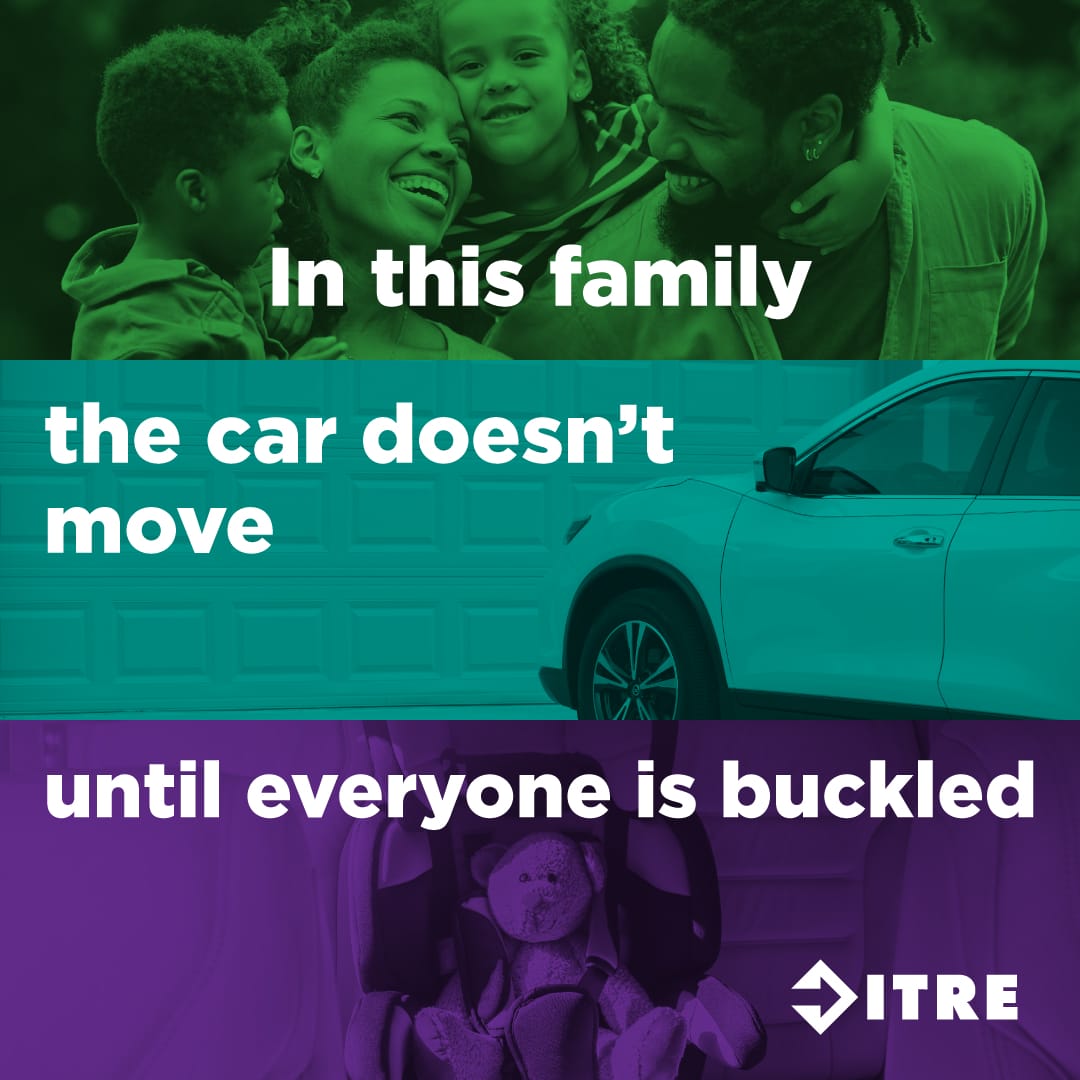
Rule 2: The car doesn’t move until everyone is buckled
Establish seat belts as step one to every and any trip. Even if your family is good about seat belts, say this rule aloud before every trip to help it become second nature.
“Whenever we get into the car, I ‘race’ my son to see who can get buckled first.”
Talk to your children about the dangers of unbuckled passengers, and practice situations when they may have to ask someone else to buckle up when you’re not there.
Rule 3: We follow speed limits to stay safe
Higher speeds lead to more severe crashes. Talk with your family about the importance of controlling speeds and discuss strategies to consistently check speed on the road.
“If anyone in my family is running late, we text (before driving) that we’ll be late and will arrive ASAP = As Safe As Possible. We never encourage or support someone trying to ‘make up time’ by speeding.”
“I use adaptive cruise control on the highway to make sure I don’t accidentally speed.”
“Anytime I pass a speed limit sign, I check my speedometer.”
You’re driving the kids to soccer practice and your phone starts ringing – probably your husband calling to tell you about a duffle bag or snack left behind. In the lovely chaos of raising a family, these types of situations are typical. You are simultaneously a loving parent and a taxi driver. You’re a manager of sorts, always “on call” for your family, juggling schedules and quality time together. But in the midst of the busy commutes and carpools, you’re building more than a life routine for your family. You’re also building habits that your kids will carry for life.
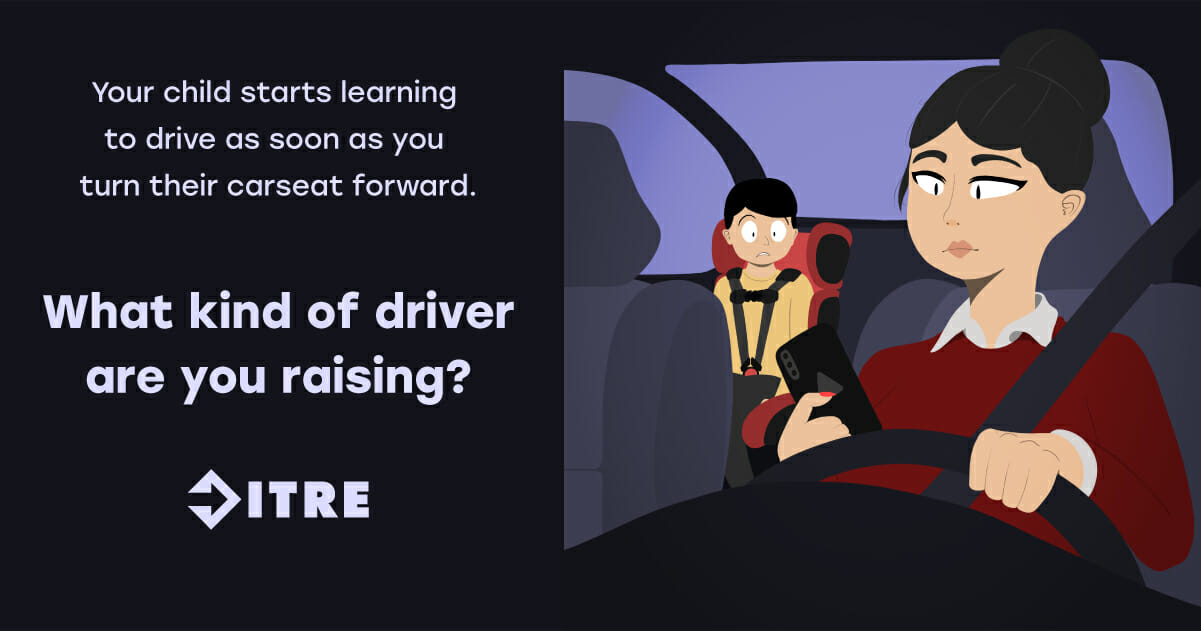
In the bustle of the day, you may not think twice about a quick text at the red light or a check-in call with your partner while you drive. But from a very young age, children notice and absorb our behavior – including how we interact (or not) with our phones while driving. Are you (unintentionally) showing your kids that it’s ok to drive distracted?
Years from now, when your little ones are old enough to drive, you will do as all parents do. You will urge them to “Be safe!” You’ll tell them to buckle up, follow the speed limit, and avoid distractions. But by then, it may be too late. If they have watched you use a phone while driving their whole lives, that is what they will replicate.
It’s never too late: shaping new habits after mistakes
With the demands of modern life and the pressure to be constantly accessible, it’s understandable if you or other members of your family have developed a distracted driving habit over the years.
The important thing is being able to critically assess what is most important for your family’s safety from now on and do your best to approach the future with a clean slate and a new standard.
Children learn valuable lessons when they see a parent admit mistakes and strive to change. While it may be uncomfortable at first, having a vulnerable, honest discussion with your kids about how you plan to stop using a phone behind the wheel may even be a more impactful lesson for them in the long run.
So if you’ve been driving distracted with your kids for years, take a breath and grant yourself some forgiveness. Dust it off. Talk it out with them and commit to some new family rules like the ones listed below.
Be a Safe Road Model: Keep Your Eyes on the Road and Hands on the Wheel
It’s hard to imagine your sticky-fingered toddler behind the driver’s wheel. But before you know it, they will be in the driver’s seat. And the most influential driving lesson they have received is the years they spent observing you.
Family Rules to Stay Safe
Setting family rules ensures that your children consistently observe (and absorb) safe habits. Download and discuss the Traffic Safety Family Contract below to get started.
To help each other stay accountable to the Family Contract and avoid using phones while driving, discuss the following before signing the contract.
The Why: Driving requires 100% focus
The difference between a near-miss and a serious crash is often a few milliseconds of reaction time. Those lifesaving milliseconds are lost if you take your attention off of the road for a call or your eyes off of the road for a “quick” glance at your phone.
The How: Using Technology to Stay Focsued
As a family, set up Driving Mode/Driving Focus on your phones. Driving Mode or Driving Focus should automatically silence text and call notifications while driving. Removing the temptation to answer by silencing notifications will make it easier to stay focused.
Pro Tip: Set up Driving Mode/Driving Focus to automatically turn on when connecting to your car’s Bluetooth.
In Case of Emergencies
Many phones allow repeat callers (people who call multiple times in a row) to send notifications even with Driving Mode or Driving Focus enabled. If your phone does not allow this setting, establish a protocol for your family to signal an emergency while someone is driving, like the example below.
Once you’ve established a family rule to not answer the phone while driving, discuss what to do in case of an emergency. For example, if someone urgently needs to reach the driver, they should call twice in a row. That signals to the driver to pull over to a safe place and call back.
In this family, we advocate for safety
You’ll also want to prepare your children to speak up if they see distracted driving when you’re not around. What will your kids do if they are in the car with another adult who uses a phone while driving? What can they say or do if they don’t feel safe in someone else’s car? Discuss various situations together and have them practice speaking up if a driver is distracted.
Pro Tip: Come up with a “traffic safe word” that your kids can use to signal to you that an adult is being an unsafe driver. For example, if your kids call or text you that they want “orange popsicles” later, that may be your family’s secret signal that an adult driver is being unsafe. This allows you as the adult to either talk to that person or arrange a different ride for your children.
Keep each other accountable
Your family is more likely to stick to the contract if everyone has equal input and accountability on the rules. Agree to “watch out for each other” rather than have the adults carry the full responsibility of enforcing the rules. While it may be challenging to your family dynamic at first, your children should have permission (and encouragement!) to remind adults of the rules if they slip. By allowing everyone in the family to remind each other, everyone will be equally committed and invested in the agreement.
Pro Tip: Come up with a few phrases or words that your family can use to remind each other of the rules without additional conflict or discussion. For example, if anyone in the family says “Williams’ Focus” (using your family’s last name), the driver agrees to stop using a phone.